Try Psychedelic Ready!

 Your payment is protected

Your donation is being processed
Please do not resubmit. This page will update automatically once your donation is confirmed.
Thank You for Supporting Entheology Project
Project:
Amount:
Type:
We sincerely appreciate your generous donation to Entheology Project Inc. As a 501(c)(3) public charity (EIN 88-1953133), your donation is tax-deductible to the extent allowed by law. You will receive an email confirmation for your records, which can be used for tax purposes. Your support helps us continue our mission and make a meaningful impact!
Return to Support a Project | Share This Project
Best Regards,
EP Support
help@entheologyproject.org
We could not complete your donation.
No payment was recorded. Please review your payment information or try another method.
Congo’s first legal iboga export: what it fixes, and what it can’t
By Rev
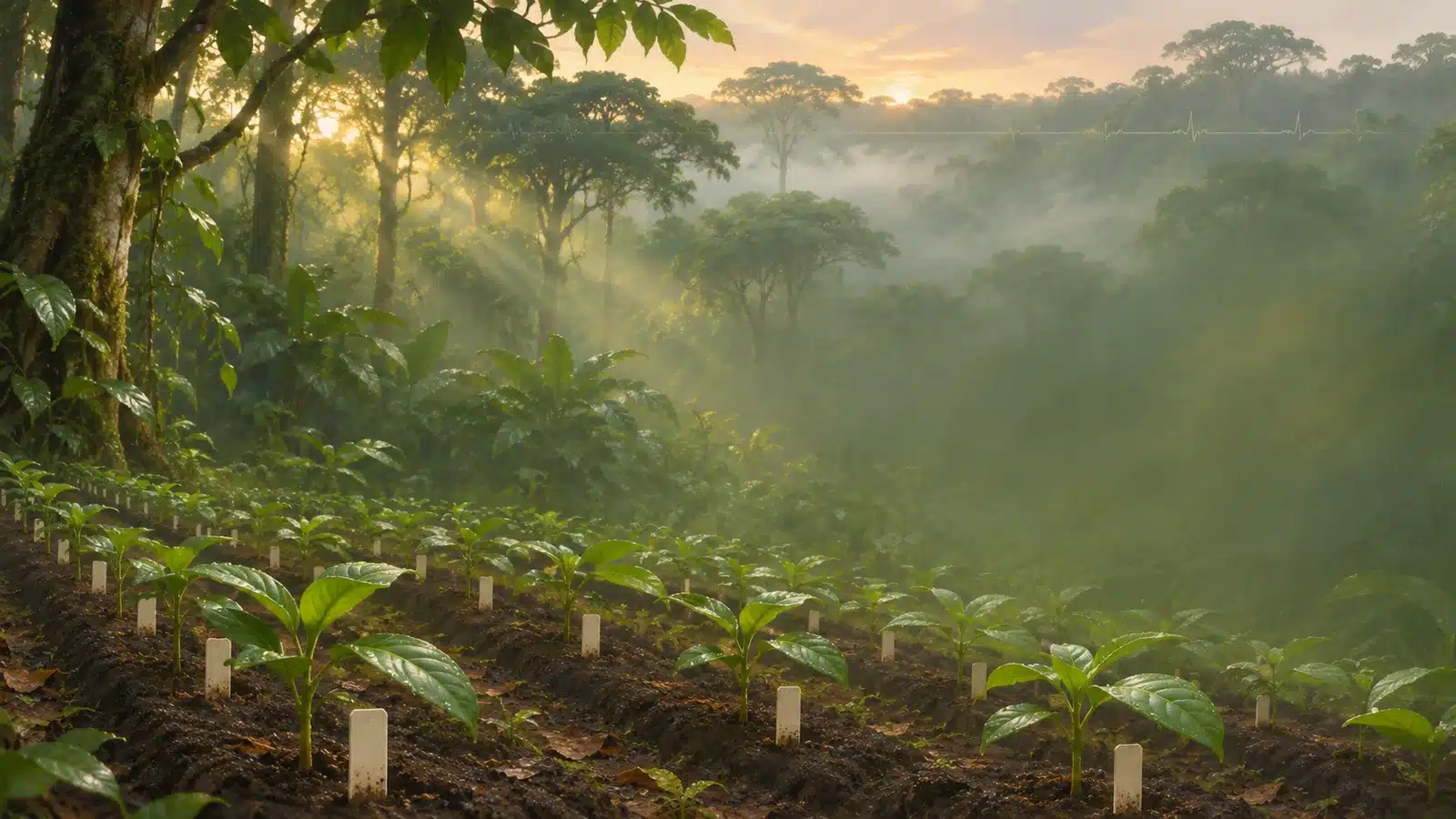
This week Pharmagaine, a San Francisco company, put out a release saying its Congolese subsidiary got something nobody had before. In the company's words: "Pharmagaine S.A.R.L.'s application was the first for iboga export approved by ACOREP," the Democratic Republic of Congo's authority over psychotropic substances. ACOREP hasn't confirmed it publicly. I searched its site and found nothing yet, so for now this is the company's account. It's still worth slowing down on.
Iboga is the shrub. Ibogaine is one of the alkaloids in its root bark. In Central Africa, Bwiti communities have worked with it in initiation and healing for generations. In the West, it's known mostly as something people travel to Mexican clinics for, hoping to get off opioids.
Here's what the company says is new. Per the release, "material must be analyzed by the national quality control laboratory before any transfer abroad." The plants come from a 50-hectare farm grown from seed rather than wild stands, and the company says every plant is tagged and tracked. It says it got written consent from customary authorities before collecting anything, and that "national access and benefit-sharing certification under the Nagoya Protocol is being pursued." Pursued, not granted.
Why does any of that matter for harm reduction? Because nobody in the gray market knows what they're holding. When researchers tested 16 iboga products from providers and online sellers, the ibogaine content in "root bark" ranged from 0.6% to 11.2%. One sample had no iboga alkaloids at all, and most contained unknown substances (Bouso et al., Archives of Clinical Psychiatry, 2020). You can't prepare for something when you don't know what's in the jar.
So a tested, traceable plant is a real step. It isn't the whole answer.
The harder truth is the heart. Ibogaine can slow the way the heart resets between beats, which shows up on an ECG as a prolonged QT interval. In a Dutch hospital study, 14 carefully screened patients received pharmaceutical-grade ibogaine under monitoring. Half of them crossed a QTc of 500 milliseconds, a level cardiologists treat as a red flag (Knuijver et al., Addiction, 2021). A forensic review of 19 deaths found most involved existing heart disease or other drugs (Alper et al., Journal of Forensic Sciences, 2012). Serious arrhythmias have also been reported in people with no heart history (Litjens & Brunt, Clinical Toxicology, 2016). How fast a person clears it depends partly on their genes, specifically a liver enzyme called CYP2D6 (Knuijver et al., Journal of Psychopharmacology, 2024).
Clean supply doesn't change any of that. Screening, monitoring and people trained to respond do.
The promise is real, and it's early. Open-label studies report fast drops in opioid withdrawal (Brown & Alper, American Journal of Drug and Alcohol Abuse, 2017; Malcolm et al., Journal of Psychoactive Drugs, 2018). A Stanford study of 30 Special Operations veterans with brain injuries reported large improvements in PTSD, depression and day-to-day functioning (Cherian et al., Nature Medicine, 2024), and most of that held at 12 months (Faerman et al., Translational Psychiatry, 2026). Still, there's no randomized controlled trial of ibogaine for opioid use disorder, and the veterans study had no control group.
Then there's the plant. Iboga takes years to mature, and harvesting root bark can kill it. Researchers report the price of iboga in Gabon rose about 800% in a decade, with overharvesting and smuggling pushing scarcity back onto the communities who kept this tradition alive (Ermakova & Gandy, Frontiers in Conservation Science, 2025). A 2026 commentary in the Journal of Psychopharmacology said ibogaine science has mostly moved forward without real reciprocity toward Bwiti knowledge holders (Magar et al., 2026).
All of this lands two weeks after the U.S. government funded groundwork for ibogaine trials. Demand is about to grow.
Three things have to move together. Knowing what's in the medicine. Knowing what's in the person: their heart, their medications, their history. Making sure the people the plant came from aren't left holding nothing. Get one right and miss the other two, and we've only built a cleaner version of the same old problem.
That's what preparation looks like when a whole field has to do it.
Rev | Entheology Project · EntheoDNA · Psychedelic Ready
Original source: Pharmagaine release, ACCESS Newswire, Nov 26, 2026: https://www.accessnewswire.com/newsroom/en/clean-technology/pharmagaine-receives-acoreps-first-approval-to-export-iboga-from-the-democratic-re-1307959
Papers cited: Bouso et al., Archives of Clinical Psychiatry, 2020, doi:10.1590/0101-60830000000231; Knuijver et al., Addiction, 2021, doi:10.1111/add.15448; Alper et al., Journal of Forensic Sciences, 2012, doi:10.1111/j.1556-4029.2011.02008.x; Litjens & Brunt, Clinical Toxicology, 2016, doi:10.3109/15563650.2016.1138226; Knuijver et al., Journal of Psychopharmacology, 2024, doi:10.1177/02698811241237873; Brown & Alper, American Journal of Drug and Alcohol Abuse, 2017, doi:10.1080/00952990.2017.1320802; Malcolm et al., Journal of Psychoactive Drugs, 2018, doi:10.1080/02791072.2018.1447175; Cherian et al., Nature Medicine, 2024, doi:10.1038/s41591-023-02705-w; Faerman et al., Translational Psychiatry, 2026, doi:10.1038/s41398-026-04327-5; Ermakova & Gandy, Frontiers in Conservation Science, 2025, doi:10.3389/fcosc.2025.1569528; Magar et al., Journal of Psychopharmacology, 2026, doi:10.1177/02698811251387104.